
Rachael Brooke, Phillips-Rooks District Extension Agent Agriculture and Natural Resources

Body
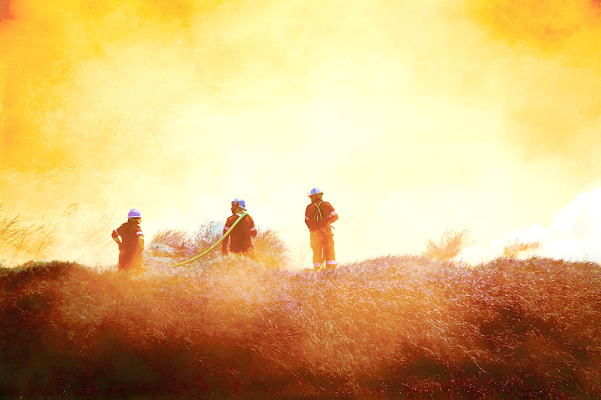
Protecting Your Home from Wildfire Wildfires have always been part of the Kansas landscape. While rural fire departments provide protection to rural life and property, recent years have increasingly seen fires that exceed the ability of even the best fire departments to control fires, quickly creating a situation where fire fighters simply cannot defend every threatened structure.
wildfire

Insight From Kansas Farm Bureau

Body
It’s beginning to feel and look a lot more like summer is quickly nearing! The kids have wrapped up their school year, the alfalfa is about to bloom, the cows have come home to graze, and the wheat is waving in the warm Kansas winds.
Summer in Sight Kim Baldwin, McPherson County farmer and rancher

Insight from Kansas Farm Bureau

Body
The saying, “farmers never retire, they farm until they die,” is accurate for my paternal grandfather. Grandpa turned 95 this winter and outside a short Navy deployment at the end of World War II, he has farmed all his life.
jackie mundt

Rachael Brooke, Phillips-Rooks District Extension Agent Agriculture and Natural Resources

Body
Plastic mulches have long been known to provide advantages for the vegetable grower including earlier fruiting, increased yields and weed control. More recently, advantages have been noted for colored mulches over the more traditional black plastic mulch. With tomatoes, the color of choice has been red. Though normally there is an increase in production of marketable fruit with red mulch over black mulch, the amount of the increase varies with the type of year we have. There may be no increase during years of near-perfect weather or up to a 20% increase with less favorable growing conditions. A good average expected increase is about 12%.
Red Plastic Mulch and Tomatoes

Rachael Brooke, Phillips-Rooks District Extension Agent Agriculture and Natural Resources

Body
Cow-calf producers use various strategies to manage price risk, including futures and options. Livestock Risk Protection (LRP) is a type of livestock price insurance that typically costs less than a put option. LRP makes payouts (indemnities) that replace the income that is lost due to a price decline. For cow-calf producers interested in the price risk management and income benefits of LRP, this article discusses a few key policy details.
cow and calf

Insight From Kansas Farm Bureau

Body
Wading Into Water Glenn Brunkow Pottawatomie County farmer and rancher Water, it is the most important resource we have, not just in agriculture but humanity as a whole. It is an extraordinarily complex and difficult issue.
Insight
Subscribe to Extension News & Insight