

Jack Berkley’s Missions during World War II
Remembering A Local Hero
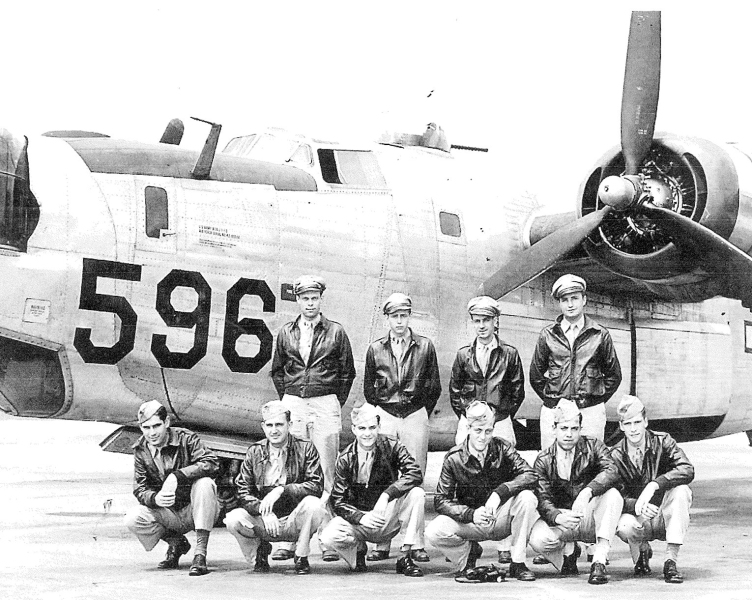
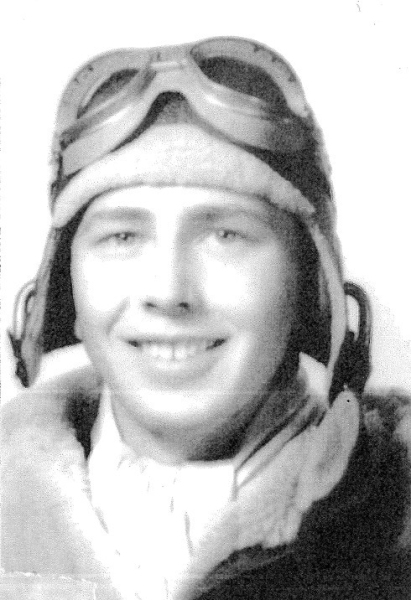
As we gather to commemorate Veterans Day on Tuesday, November 11, we take a heartfelt moment to honor the brave men and women who have served our country with courage and sacrifice.
This day is not just a celebration, but a solemn reminder of the sacrifices made for our freedom and the values we hold dear.
Let us reflect on the stories of our war heroes, recognizing their unwavering commitment and the profound impact they have had on our nation.
Today, we express our gratitude and respect, ensuring that their legacy lives on in our hearts and our communities.
And for this Veterans Day, it is only fitting that we reflect on one of our hometown heroes, First Lt. Jack B. Berkley. Jack's son, James, brought the Sentinel information about his father's 31 missions he flew while serving our country during World War II.
Here is the story of Jack and his missions.....
Jack entered the Army Air Corps on February 21st, 1943, and served in the European Theater during World War II. He trained at the following places: Jefferson Barracks, Missouri; College Training Detachment, Marshall College, San Antonia, Texas; Ballinger, Texas; Goodfellow Field, Texas; San Angelo, Texas, Foster Field, Texas; and Savannah, Georgia.
Jack was commissioned as a Second Lieutenant on June 27th, 1944, and was assigned to the 392nd Heavy Bombardment Group of the 8th Air Force near Wendling, Norfolk County, England. He was a co-pilot on a B-24 Liberator and during his service completed 31 missions over Germany, France, Belgium, Luxembourg, the Netherlands, Denmark, and Czechoslovakia. He was promoted to First Lieutenant on April 8th, 1945. His foreign service was from October 1944 to May 1945, and he was discharged in November 1945.
Mission 216 was Jack’s first mission on December 28th, 1944. All bombers flew from Wendling over the railroad marshalling yards (Keiserlauytern) with a report of one B-24 and aircrew lost, while eleven other bombers had minor battle damage.
Mission 219 was on New Year's Day, December 31st, 1944, to Euskirchen. A bridge and railroad lines were the targets. Twenty-nine crews were given general briefings. They were hit by 12 to 15 enemy fighters, with two members of the 577th crew wounded during the fighter attacks.
Mission 222 ary 3rd, 1945. The marshalling yards at Landau were the slated target for 19 air crews. No fighters were encountered, and flak was very light. One bomber returned with some battle damage, with all landing safely back at Wendling.
Mission 224 was conducted on January 7th, 1945, targeting the railroad station at Landau with the secondary target the Kaiserslautern marshalling yards.
Mission 225 was a tactical target in the Dasburg and Burg Reuland area, six to twelve miles beyond friendly front lines in the Bastogne salient on January 8th.
Mission 228 was for a non-tactical target, focusing on Germany's oil production. The large oil refinery complex was near the town of Heide. The success of the bombing on this raid, dated January 14th, was congratulated by Generals Doolittle, Kepner, and Johnson.
Mission 230, on January 21st, 1945, was to the marshalling yards in a key rail-waterway city just north of Stuttgart.
After the heavy snow had ceased, take-offs were delayed while the runway and perimeter taxiways were reopened. Five ships were early returnees, with the remaining 15 going over the target. The mission was one of the longer- duration flights, and two aircrews were forced to land on the Continent due to low fuel.
Mission 232 on January 29th had the assigned primary target, the Altenbeken Viaduct near Paderborn, and the secondary target, the marshalling yards at Hamm. No enemy fighters were encountered, and friendly fighter support was rated good throughout the mission.
Mission 245 on February 6th was against the oil field complex facility.
After briefings were completed, a force of 29 ships went over the target area of Madeburg. A total of 265 bombs were dropped.
Mission 237 on February 14th, due to continued poor bombing weather, various target options were selected, with the 30 air crews briefed on all three. Plan C was designated as 'go', but on the bomb run, the entire lead squadron, due to an armament malfunction, released some bombs 25 miles out from the target.
The other two squadrons continued their runs over the marshalling yards at Magdeburg with fair results.
Mission 239 on February 16th identified the primary target as the fuel plant at Salzbergen, with the secondary target the Rheine marshalling yards.
A force of 30 crews was briefed, but fog delayed take-offs; Wendling was closed down due to zero- zero fog conditions.
First Lieutenant Albert J. Novic and crew had an extremely close call.
Due to the tightness of the squadron and the fog, another Liberator in a higher formation had moved in on top of him to obtain the compact bomb pattern and dropped six bombs through Novik's left rudder. Novik stayed in formation, keeping the plane in the air for 4.5 hours, but the decision was made to bail out, with all landing safely on the ground, forfeiting the 'Mary Louise' that had flown 70 missions.
Mission 240 on February 21st was the rail facilities at Nuremberg, with a force of 28, encountering no fighters or flak.
Mission 242 on February 23rd was a strike on the marshaling yards at Weimar. All bombers returned to base safely. Allied fighter coverage was rated as excellent.
Mission 243 on February 24th was a strike on transportation facilities near Misburg. All ships went over the target with excellent friendly fighter support, and no enemy aircraft were sighted. Flak was meager, but accurate enough to cause battle damage to three returning Liberators. All were recovered safely.
Mission 245 on February 26th was the Stettiner marshallng yards in the northeast part of Berlin.
The group provided 31 crews with brief, friendly fighter support throughout the mission and remained fearless, as no enemy aircraft approached to challenge them. Flak was spotty, but later intensified. All aircraft returned safely, with three receiving battle damage. Results could not be accurately observed because of low cloud cover.
Mission 246 on February 27th was the railroad marshalling yards at Halle in central Germany. Damage to the planes was a flak hole in the #1 engine in #118, but it was felt that the hole was likely from a previous mission; sight gauges were out in #906, but it had sufficient gas to return to the base the next day; and in #901, engineer S/Sgt Kendenburg got glass fragments in his eyes.
Mission 248 on March 1st was the rail marshalling yards in the key center just south of Nurnberg (Ingolstadt). This extended mission of 9.00 hours had the 30 crews over the target, but they were forced to release their loads due to HSX radar, since low clouds obscured the target. The results were not observed, and on the way home, about one-third of their aircraft had to land on the Continent to refuel before all ships returned safely to Wendling.
Mission 249 on March 2nd was the oil refinery facilities in the northern part of Magdeburg.
Twenty-one aircrews were briefed, and the first squadron hit the oil complex with pinpoint accuracy. A tragic accident happened during this mission, involving ship #302, flown by Lieutenant W.
G. Blakeley's crew, which was last seen spiraling down with two chutes deployed. No enemy fighters were seen, but the flak was heavy at times and pretty accurate. One B-24 came home with battle damage, and one ship was not accounted for. It was later learned that Second Lieutenant Downs in ship #246 had landed at Manson with left waist gunner S/Sgt Cinquina killed by flak. Five were Killed In Action, and five were captured as prisoners of war during this mission.
Mission 254 on March 8th was the marshalling yards at Siegen with 28 aircraft assigned. All aircraft flew over the target area, but only 18 were able to bomb; the remaining ships jettisoned their loads on the way home. The problem developed when the GH lead ship had HSX adar malfunctions, and the GH direction ground station became inoperable. No enemy opposition was encountered, and all bombers returned to Wending safely.
Mission 255 on March 10th had the primary target, the viaduct by Bielefeld, and the secondary target, the marshalling yards in town. As in many preceding raids, no enemy fighters were sighted, and flak was meager and inaccurate.
Mission 256 on March 11th had, for the first time since August 4th, the naval facilities at Kiel assigned to the group for a strike. On this occasion, submarine pens were again briefed wth bombers to start launch at 0920. The entire force went over the target but had to bomb by HSX due to weather. Navigator reports on return indicated that bombs were on target. One bomber returned with flak damage, but all landed safely at home.
Mission 266 on March 22nd was seen as the most regrettable and tragic mishap that occurred in the closing days of the group's combat operations. A squadron commander and lead crew were lost during the strike at the Schwabisch Hall Jet Airfield, located on a high plateau just east of the city. 100% of the bombs impacted the target, with no enemy fighters confronting the formation. However, as the bombers coasted in and were letting down toward Wendling, an unfortunate accident occurred in the lead ship from the 579th. Captain Grettum's crew flying lead had their ship set afire by flares, which exploded on the flight deck of the bomber. The loaded flare gun had jostled loose from the ceiling mounting and discharged, apparently setting off a box of pyrotechnic flares located just behind the pilot's seat. Four crew members managed to bail out safely with a total of eight casualties.
Mission 267 on March 23rd was the marshalling yards at Rheine. 90% was struck at the aiming point with no enemy fighters seen. Two returning bombers sustained minor flak damage. As the aircrews landed, the entire base was put on restriction for a big supply mission the next day in conjunction with the big push across the Rhine.
The supply load for 26 bombers commenced that afternoon, with 13 loads for the British and 13 for the US troops.
Missions 268 and 269 on March 24th were the largest single-day airborne operation in history, with paratroops and ground troops from the United States, Britain, and Canada delivering behind enemy lines with nearly 1,600 aircraft and gliders engaged in Operation Varsity. The target area was DZ-Wesel. Casualties included Elmer Milchak and Pfc Stuart S. Stryker, who was posthumously awarded the Medal of Honor.
Mission 273 on April 4th was to Kaltenkirchen airfield, but due to overcast over the target, the group did not bomb.
Mission 279 on April 11th had Regensburg as the target for the raid. The bombs impacted squarely, with 98% hitting within a 2,000-foot circle of the target. All crew returned safely to base.
Mission 281 on April 15th had Royan as the target. The new Napalm bombs were carried with a mixed load of 100# weapons. The Napalm canisters were dropped along with 156 100-pounders to act as diffusers for the Napalm.
The mission was rated most satisfactory, though the new weapons were noted to have very unpredictable trajectories. Seven bombers came home with some damage.
Mission 282 on April 16th was the marshalling yards of Landshut, a city located between Munich and Regensburg. This strike was the continuation of the effort to choke up what remained of the German transportation network near the eastern front of Bavaria. This mission was one of the longer routes with bombing results, though generally good, not as accurate as those of the previous missions.
Mission 283 on April 17th was for a railroad network and the marshalling yards of Beroun.
No enemy fighters were sighted, and flak was negligible. As this mission rang to a close, an epochal announcement was made by higher headquarters to all eight Air Force bomber units. It was stated that, as of the date, strategic targets in Germany no longer existed, and that, hereafter, bombing efforts would be directed in support of the advancing ground troops.
Mission 285, on April 25th, went down in the annals of history as the last mission in combat to be flown by the mighty Eighth Air Force's bomber units, though it was not realized or known at the time. The 392nd committed 28 crew sorties with the target area being Hitler's Redoubt in the Obersalzburg Mountain retreat near Berchtesgaden. The target was the marshalling yards at Hallein, a site approximately ten kilometers northwest of the Redoubt and just south of Salzburg on the main transportation routes.
No enemy resistance was encountered on the route, and the weather over the target area was clear.
As the 392nd left the IP, some of the heaviest AA fire ever seen was thrown up by enemy defenses.
Smoke clouds from the flak were so dense that at times bombers in formation were completely engulfed as they flew through the barrage. It was later confirmed that the AA's last-ditch defenses consisted of heavy railway car artillery and approximately 105- and 155-mm-caliber guns, which had been rolled in to protect the last vestiges of the German resistance.
On the bomb run, the group released a total of 444 250# GPs and 500# incendiaries in the railway yards. Two squadrons achieved excellent results. The ten Liberators took considerable flak and battle damage, and all but one returned to Wendling safely, with a badly crippled #519 landing at B-53 on the Continent after having its flight controls shot up. The end of the war was at hand.
