


The History Corner
By Rick Gianni, Rooks County Museum Coordinator
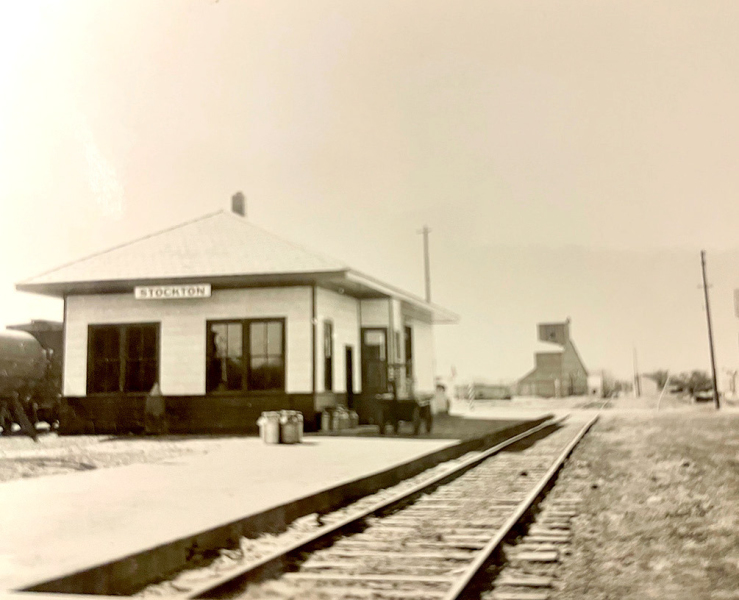
History isn’t simply the study of famous people or important events. History can be found through dimensions and length. Measurements established both infrastructure and everyday transportation. The history of movement melts down to one simple measurement, 4 feet, 8½ inches. This became the standard railroad gauge used throughout the United States. But even that size had its own historical establishment.
The argument is debated as to what influenced the 4 feet, 8½ inch standard. Most recognize the size originated in England, brought to the United States and became standard for American transportation systems. Yet the English railway system used that size because of the dimension of wagons and coaches. The spacing of wagon and coach wheels cut ruts into roads. A vehicle with different wheel dimensions was unable to stay in the carved wheel ruts and would break down. The historical argument then placed blame on the ancient Roman roads in England that used that wheel size on their vehicles. The ancient wheel tracks cut into the road influenced generations of wagon builders to adopt the same dimensions so new coaches would remain in ancient cuts.
This size began to shape the United States as it moved into the early frontier. Not everyone would catch on right away. The Southern states had numerous railroad companies that used different size gauges. A train might arrive at a state line, stop, unload freight only to reload onto a train using the different gauge, only to go through the same process at the next border. The extra work was expensive and time consuming. The Confederate government was unable to establish a standard gauge in order to run as efficiently as the northern roads. Following the war, American businessmen were convinced all rails should run with the same dimension, 4 feet, 8½ inches wide.
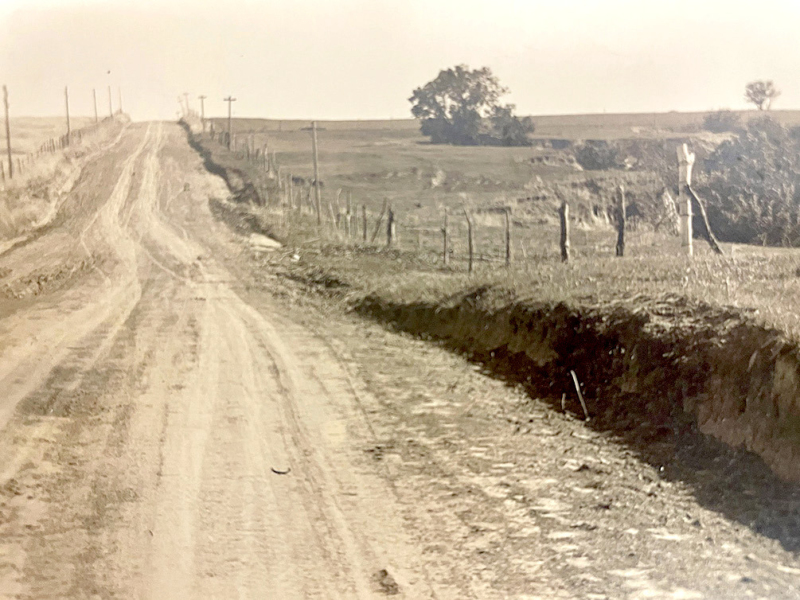
The push west of the Mississippi River moved forward, inch by inch and 4 feet, 8 ½ inches wide. Once again, wagon wheels, this time from homesteaders, cut ruts into the trail heading west. Wagons of a different gauge have trouble making the distance and everyone heading toward the Great Plains needed to have 4 feet, 8 ½ inches for their wheelbase. Those old 4 feet, 8 ½ inch tracks still remain as the old skeleton of the westward roads.
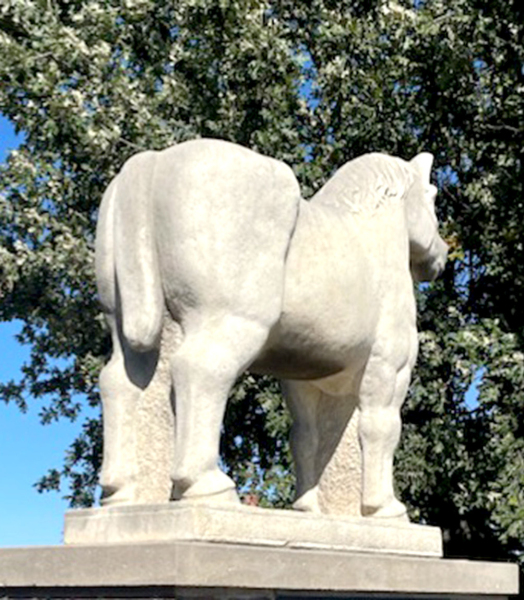
Yet, something had to influence the establishment of the 4 feet, 8½ inch size adopted by everyone from the Ancient Romans to the Kansas Homesteaders. Dimensions have reasons. Roads were sized to accommodate what navigated the roads. So, the argument continues, it wasn’t the gauge of the railroad being influenced by a wagon or coach size… being influenced by the chariot size. It was the size of the chariot, coach or wagon was influenced by a different dimension. That size was the horse’s patootie. The rump! The Roman chariot had to accommodate the size of two horse butts, which then influenced the size of the coaches and wagons that then influenced the size of the gauge of the railroad. So, the world’s transportation modes were fashioned by the back end of a horse.
Adjustments are made for the “two patootie rule.” “Wide load” signs tell others the load is wider than two butts. Combine heads for grain have to travel on their own trailer bringing them closer to the twobutt dimension. The rule has expanded in ways by having roads four butts wide such as State Road 24 or State Road 183, two patooties north and two patooties south. Interstate 70 has four butts heading west and four butts heading east.
So, in the end, not meaning the horse’s end, there is a hint of solace found for some gentlemen. Those who have been called “you horse’s (patootie)” by their loving spouse can rest easy. The joke is on them. Instead of being degraded, being called a “horse’s (patootie)” is being placed with the most important influencer of world history. But, sad to say, the joke falls into the lap of Rooks County Historical Society. Passing by the museum, there stands the statue of the regal, noble workhorse. The grand face and attentive focus held by strong shoulders looks out at all who pass by. Yet, to really salute the history of size and dimension, the society should have turned the statue so the more important part confronts the gazes of the county. Don’t simply pass by. Stop at the Rooks County Historical Society’s museum and show reverence to the grandest dimension of historical proportions. Stop in and admire our horse’s patootie!