

Young but Mighty
First-generation registered Angus breeder Cody Dix is making a name for himself
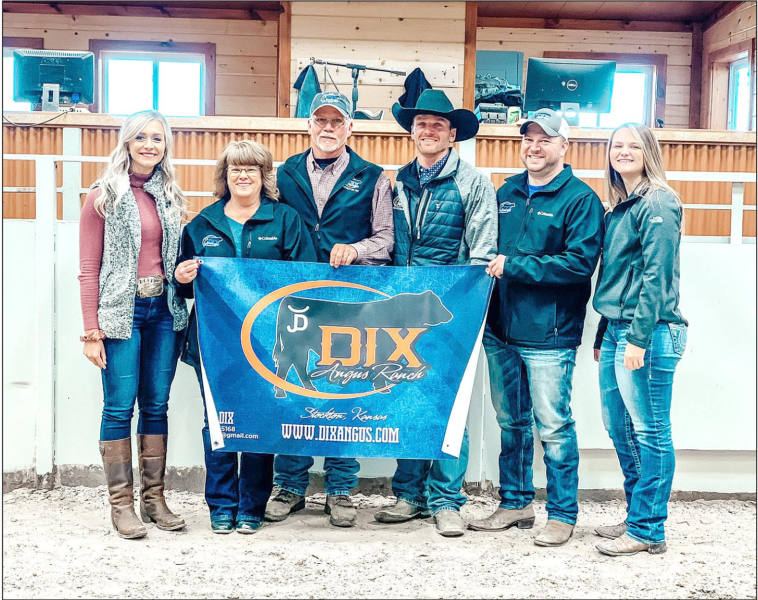
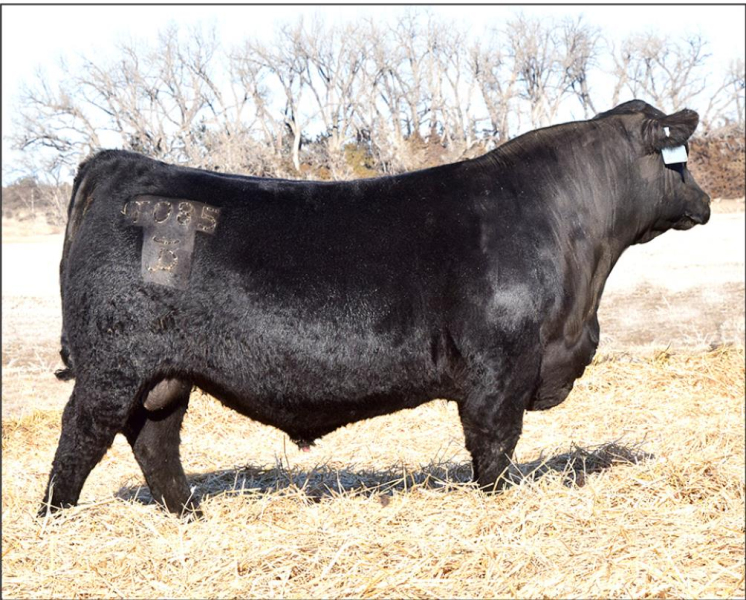
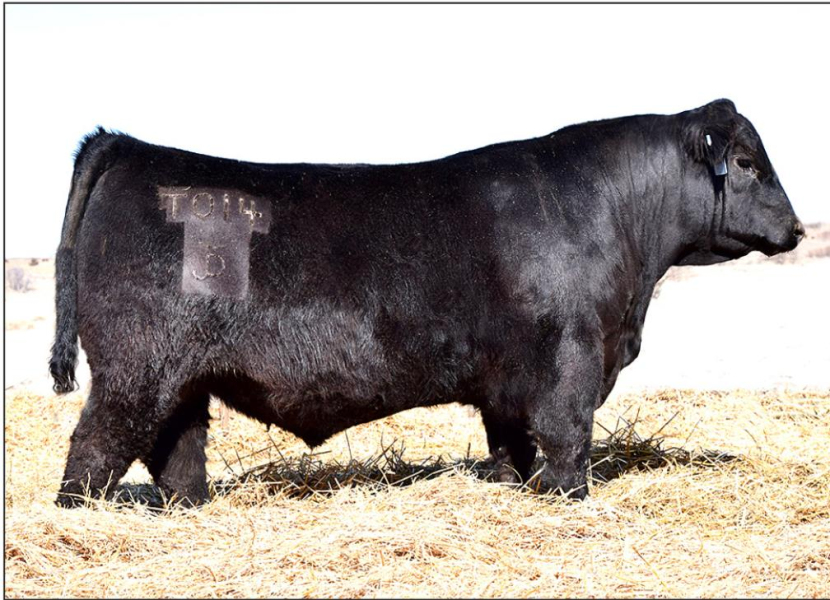
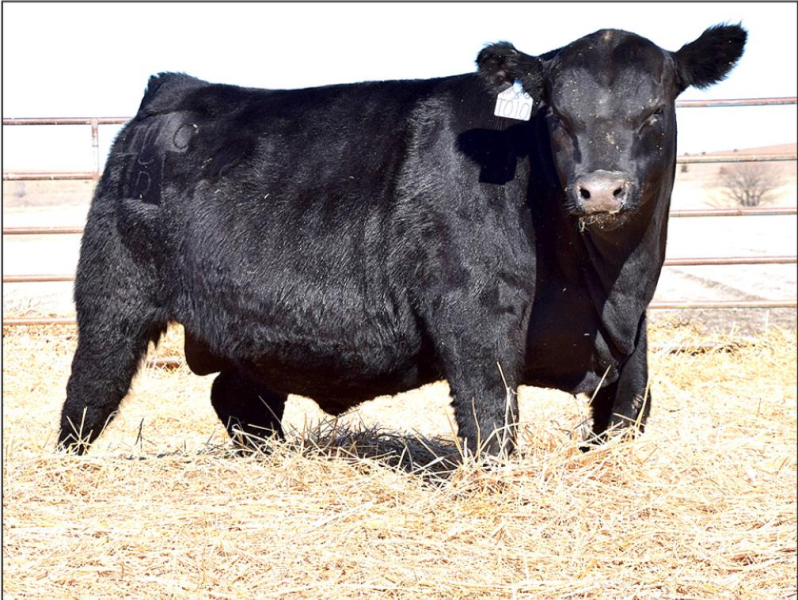
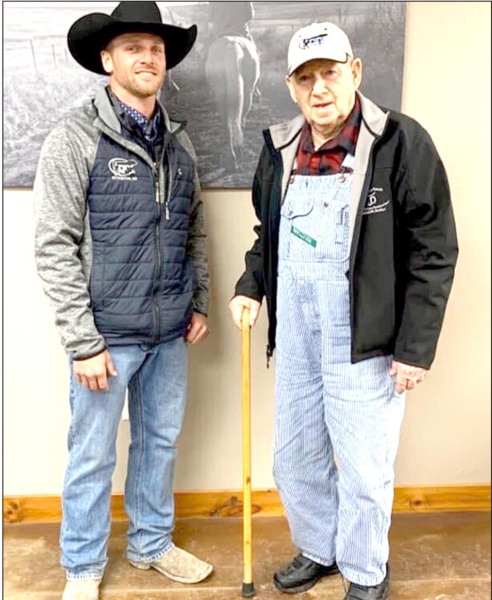
Cody Dix is not unlike most cattlemen’s sons — ambitious with a strong work ethic. But he has set himself apart from the rest, by not only finding a new business model for himself and his dad, Jeff, but also rapidly gaining popularity for his product across the nation. He’s only 32 years old.
Starting small
Raised by a third-generation farmer and rancher near Stockton, Cody was active in 4-H, and by 12 years old had already dabbled in the show pig business.
“The challenge of choosing the right combinations to make the perfect mating for what the goals are really interested me,” Dix says. “I really got into studying the pedigrees and the makeup of the animal to strive to make them the best they could be in a marketable package.”
Dix applied those same princi ples when he bought his first registered cow in 1999. “At that time my dad was running
“At that time my dad was running a bred heifer program,” he says. “The heifer bulls he needed to buy were so expensive for the quantity he needed, so he encouraged me to get started in the registered business with a focus on calving ease to satisfy his need for heifer bulls.”
Dix’s interest was piqued. The next year he bought five bred cows from Green Garden Angus in Ellsworth, Kan. The next year he bought 20 females from Molitor Angus, in Zenda, Kan.
The enterprise ballooned from there and was working so well his father discontinued the bred heifer program and started helping Cody with the registered business. In addition to the cows, his dad’s family farms about 1,800 acres of cropland, and Cody’s father has a custom forage harvesting business which consumes all of his time from August through November.
Making connections
Dix graduated from Kansas State University (K-State) with a bachelor’s degree in feed science and management in May 2011. By that time he was running about 200 registered Angus cows at home and still finding time to learn from John Slocombe of BJ Angus while in Manhattan.
“John has been a huge mentor to me,” Dix says. “He opened the door for us to market bulls with him for four years while I was at school. We were selling up to 35 yearling bulls as well as some females in his sale on top of the private treaty that we were doing at home. I also got to see firsthand how his sale was operated, creating the sale order, learning to build a [sale book] as well as sale-day preparations. That was a big opportunity for us.”
He’d been using timed artificial insemination (AI) with excellent cleanup bulls from the beginning, and was happy with his genetic progress at that point.
“We were retaining heifers every year and I bought several every year from Green Garden Angus, Molitor Angus and BJ Angus,” Dix explains.
Dix took his first group of bulls to the 2010 Midland Bull Test, in Columbus, Mont., excited to see how they stacked up.
“I took six bulls there and got three qualified for the sale,” he explains. “I was really excited to make it to the sale, but out of 500 head, all three of mine were in the last 15 and one was dead last. That didn’t sit very well with me.”
Dedicated to progress
Determined to improve, Dix returned home, studied his program and set goals to make it better.
“From what I started with developing bulls for my dad, it was all focused on calving ease and low-maintenance type cattle with not a lot of performance. That sale was the game-changer for me, and I started adding a lot more performance to my herd while trying to maintain calving ease for marketability. That’s the focus of how my operation runs today.”
He made a big change in the genetic package through his extensive AI program and the herd bulls used in the pasture. He also added embryo transfer (ET) to his bag of tricks to improve genetics. In 2011 he raised 20 ET calves; now he raises about 120 through ET.
He also bought a good group of cattle from the Summitcrest Angus, Broken Bow, Neb., dispersion in 2012; and in 2017, purchased from the Harrison Angus Ranch, Boyd, Mont., dispersion.
Every year for the last five years, Dix has retained about 80 replacements in the registered herd, which he says has been a large part of his genetic improvement.
The improvement has been substantial.
In 2017, Dix Angus leased its first bull to a bull stud; HARB Hindquarter 473 JH was leased to Beef-360.
At the 2018 Midland Bull sale, one of Dix’s bulls ran through the sale as Lot 1, which means it was the highest indexing bull, out of the 700 on test. It sold to a highly respected registered operation: Schurrtop Ranch, Farnam, Neb. In just 7 years he was able to advance from last in the sale to first. In 2018, he took 12 bulls, all qualified for the sale and most were in the front half.
The 2014 national winner of the Certified Angus Beef® (CAB®) Seedstock Commitment to Excellence Award Mike Molitor says, “Cody is highly motivated; he’s very knowledgeable. He’s very progressive for as young as he is. To have the top indexing bull out of 700 is pretty amazing. And he’s doing things right. He’s looked at a lot of people who are successful and that’s who he’s followed. I think he’s come a long way for his age.”
Customer growth
Repeat buyers and word of mouth have been a big part of the growth of sales, but he’s also used advertising to reach new buyers. Just in the last six years his market share has jumped from selling about 60 bulls to 110 annually.
“I advertise locally, but also I’ve been printing my private treaty [sale book] through Angus Media every year,” he says. “I spend a lot of time putting the [sale book] together, try to take really good pictures and put the best possible [sale book] together. I put a lot of extra time in the [sale book], because I only get one opportunity every year to promote my product to past customers as well as potential new customers.”
He continues to take cattle to Midland bull tests, and in the past has entered bulls in the Kansas and Nebraska bull tests. He uses connections from college as well.
“It’s amazing the number of contacts and customers I made through my time at K-State,” Dix says. “Many of those I met are now customers I would have never known without that experience.”
While Dix says the majority of his customers are from Kansas, in the last year he’s sold bulls in Montana, Wyoming, Oregon, Nebraska, Oklahoma, Missouri, Mississippi and Idaho.
In 2019, Dix Angus took a big leap of faith and hosted its first bull sale at Heartland Regional Stockyards in Plainville. Dix says his dad is a huge part of the operation, and of course, is helping organize and execute the sale. His father’s wife, Marianne, his brother, Brook, and sisters Haley and Chloe, all help with the cattle when needed and were an integral part of sale day.
They offered 94 bulls and a package of 60 commercial replacement heifers.
“I didn’t really know what to expect,” Dix admits. “Sale day went by so fast, and I had so many things on my mind — making sure the cattle looked good and were presented right. Everyone really came together and did their job to make the sale successful.”
He says he was very happy with the turnout, local support and the overall sale results.
“I was back looking through the bulls early in the day and friends came up and said my parking lot was full. That was a huge relief and helped me relax,” Dix says.
The second annual sale was held March 9, 2020, and offered 105 yearling bulls and 60 open replacement heifers.
“Last year was the highest number of bulls we’ve ever sold and the highest average as well,” Dix says.
Commercial based
Dix attributes his business’s growth and success to keeping his customers’ goals in mind.
“Our cows really fend for themselves,” he points out. “We calve February to April and from summer grass they graze corn and milo stalks right up until calving season. We feed our cows no more than 60 days of every year. They calve out on the range, not through a barn. These cows have to know what they’re doing, and the calves have to get up and survive. And the cows have to have a lot of longevity. The cost to replace these females is so high they need to be in produc tion as long as possible.”
By keeping emphasis on maternal strength, strong structure and not chasing any extremes, Dix has been able to help commercial cattlemen remain profitable with their bull purchases.
“We base our goals off the commercial industry,” Dix says. “We don’t do anything fancy with our cows so our genetics are a good fit for commercial cattlemen.”
Molitor says Dix has earned respect from he and others of his generation, something that can be difficult for younger cattlemen. At only 32 years old, Dix has made his mark on the Angus seedstock business.
“He’s a quiet guy but when he says something, it means quite a bit,” Molitor says of Dix. “We have a back-and-forth relationship; if he has something that’s going to improve my herd, I am going to buy it from him and the same way on his end. He’s very progressive for as young as he is. He’s really one of a kind.”
Editor’s note: Sara Gugelmeyer is a freelance writer from Lakin, Kan.