


History versus Hokum
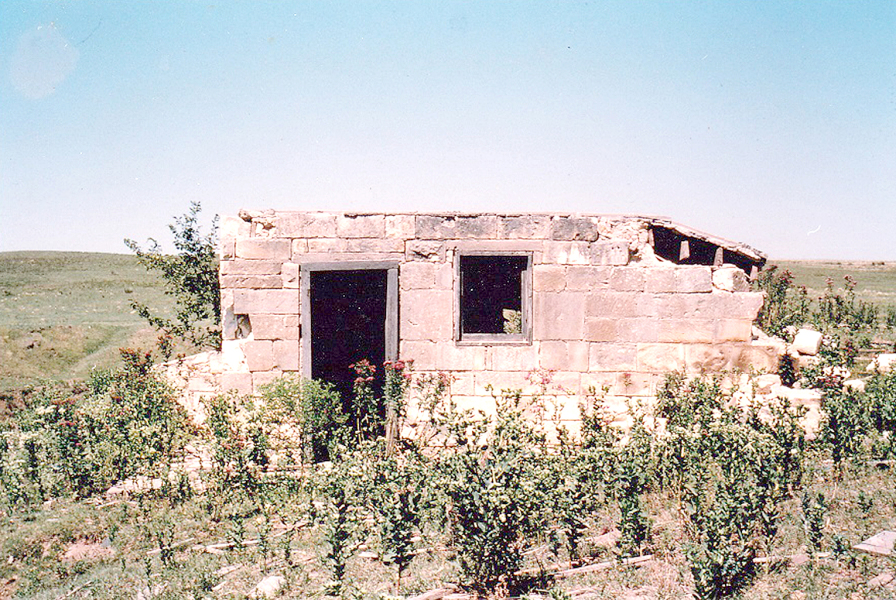
In last week’s edition, a 1962 article about the Good Castle in Stockton had been featured. Bill Skinner, who has emailed the Stockton Sentinel wonderful pictures and articles about the Castle, also sent this 1964 response from Stockton’s Francis W. Schruben referencing stories about the Castle. In his article, Schruben challenges another story about the Good Castle written in a September 1962 issue of the Central Plains daily newspaper. Here is his response: “There is a difference between history and hokum. As an example, in September 1962, a Central Plains daily newspaper published an engrossing feature article about Enos and Eliza Good and their “Castle,” the remains of which are to be found on a slope overlooking Dibble Creek, northwest of Stockton. Lending romance to this article was its development of a theme of mystery about the old stone house and its former occupants, this one does not hold together well under investigation. In the cause of accuracy this 1962 narrative should be compared with available documents and records. Such a comparison reveals an interesting object lesson that local legends are not always to be accepted at full value, that not everything written by hurried or careless journalists is to be given credence, and that even the inscriptions on gravestones cannot always be trusted. The newspaper story raised questions about such topics as why the Goods—‘lord and lady in waiting to Queen Victoria’ had homesteaded land in Kansas. Why they had built their stone castle, whether they had left England hurriedly because of political exile or a scandal, whether they were remittance people who dressed for dinner and observed a tea-hour, Eliza’s appearing in Victorian finery for church services, an unused nursery built in the old castle, and their eventual deaths and disappearance of costly furnishings given Enos and Eliza by Queen Victoria. The article concluded that in all probability any of the questions surrounding the Goods would never be answered.
A letter of inquiry to the Deputy Keeper of the Public Records, Chancery Lane, London, eventually brought an enlightening reply from Robert Macworth-Young, the Librarian of Windsor Castle, Berkshire dated November 10th, 1962: “I regret to say that no trace had been found of Enos and Eliza Good. They were definitely not ‘lord and lady in waiting to Queen Victoria.’ It must be added that for technical reasons the Goods could not have been in attendance to Queen Victoria, as presented in the newspaper article.
Miss Owen Hadley, Library and Research Assistant, the Royal Library, Windsor Castle, supplied the following information in a letter dated November, 12th, 1963. “There is no such thing as a joint appointment of a married couple as ‘lord and lady in waiting.’ You will see from this that there is no shred of possibility that Enos J. Good and Eliza Boggs held such office in the Royal Household as legend has assigned to them One or both may have held some position, but the fact that it is not readily traceable shows that it could have been only of minor importance—presumably in the domestic sphere.”
Beyond this an examination of newspaper files also disprove the belief that Enos and Eliza Good had once been in waiting to the renowned monarch. Indeed, that they had been members of the royal household as a married couple, a great deal of legerde main would have been involved requiring the talents of a Merlin because the Goods were married in the United States, not in England.
But, even here, newspaper accounts are not in agreement. The Stockton Review, March 2nd, 1922, reported that Eliza, the second wife of Enos Good, had married him in England before they came to this country. The Rooks County Record, dated March 2nd, 1922 agreed that Eliza was the second wife, but said she and Mr. Good had been married in Cincinnati in1880. At an earlier date, however, the Record on October 10th, 1905, had written the correct version, relating that the ceremony had taken place in Cleveland on February 9th, 1880. That this is correct may be determined on consulting Volume 23, page 24 of the Marriage Bureau in Cuyahoga County, Cleveland, Ohio.
But to return to the feature writer who raised the issue of why the Goods built their stone castle and remained alone in it until they died. An obvious reason is that limestone was easy to obtain, if not on the Goods’ own farm, then from an early day quarry, a quarter-mile across the creek valley. The material was cheap and easy to assemble. It was the fashion to build rock houses and buildings, a few of them still standing in Stockton. The Good’s isolation might have resulted from their being somewhat different from other people in the community, but it must be agreed that the castle’s size remains mystery.
As for the statement that the Goods had been exiled, either for political reasons or because of a scandal, no evidence involving the English couple appears among the sources that have been examined, nor would a considerate researcher dig into scandal unless some useful purpose could be served. Only the basest of persons would needlessly damage reputations past or present. The belief that the Goods were political exiles is discounted by another letter from the Windsor Castle Librarian, who in August 1963 wrote: “I do not think there can be any truth in the rumor that the Goods were exiled for political reasons. It is true that if one goes far enough back in our history there were such things as political exiles, but not, I think within the last hundred years.”
If old records of the Stockton banks could be consulted, it might be found that the Goods had received money from overseas, but this would not of itself mean that they were political exiles.)
The point was then made that the Goods retained many of their English habits, such as dressing for dinner and observing a tea hour. Eliza reportedly wore her “dated” Victorian clothing when she attended church services in Stockton But why not? Being English it seems only natural that the couple should have British customs and it is just as understandable that as immigrants that would excite a certain amount of romantic gossip. As for Eliza’s clothing, it is possible that she simply lacked funds, or was an individualist who had too much common sense to squander money on fatuous fashion.
Continuing with its refrain of mystery, the story turns to the nursery, allegedly made ready in the old castle but never used. Unfortunately, no babe ever arrived for the Goods, but obituaries of Enos refer to a granddaughter, a Mrs. Wood and her family who came to Stockton to care for the aged man in his last days. Perhaps the nursery had been fitted out for visiting grandchildren. Mrs. Wood apparently was one of two daughters born to Walter Good, Enos’s son by his first marriage in England. According to the Rooks County Record, Walter Good came to Kansas with his father and moved on to Colorado when he became a man, dying there some eighteen years before his fathers’ death.
But the newspaper version of 1962 correctly stated that Enos died two years later—later than 1920. Here, curiously, the marker on his grave is evidently wrong, the inscription reading that he died on February 24th, 1923. Both the Record and the Stockton Review wrote his obituary in 1922, not 1923. It is not likely that the story of his death could have been written a year before it happened. The error may be accounted for by the monuments having been erected at a later date, possibly at the same time that Eliza’s stone was put down, for they are almost identical.
A note of obscurity continues toward the end of the 1962 account when mention is made that “costly” furnishings given Enos and Eliza by Queen Victoria years earlier were never found.
It is suggested that Enos might have buried the articles or shipped them somewhere. It would be illuminating to know when Victoria could have presented Enos and Eliza Good with these “costly furnishings,” particularly in view of Windsor Castle and other records which contain no indication that they had ever been in waiting to the great nineteenth century queen. It has already been established that Enos and Eliza Good became man and wife in this country. Probate Court records in Cleveland substantiate this.
Three exceedingly well-made photographs accompany the article under question. The snapshot of the old castle’s ruins is a masterpiece; a shattered past graphically recalled by the view of the broken date stone of 1880; but the portrayal of ‘Milady’s Boudoir” with its old iron bedstead amid the ruins calls for more explanation. The old bedstead looks very much the same as the one in the photograph I made in the summer of 1963. My photography shows the bedframe standing in the remains of a small rock house located 160 feet south of the Good castle site. The first hand opinion is offered that this small dwelling, made of stone from the larger structure, was built during the late 1930s when the farm was occupied by Mr. and Mrs. C. A. Robbins. If the pictures shows what is left of the late Mrs. Robbins’ bedroom, then in that sense it may indeed be entitled “Milady’s Boudoir.” It is possible that an error was made in labeling this photograph. Again looking at the journalist’s handiwork one can agree that the castle is a crumbling ruin, and one can agree that “time and the elements”—a familiar phrase—will spell its end, but we need not agree that it’s almost certain that the mysteries surrounding it for many years never will be answered. This brief exposition has tried accurately to unravel some of the mysteries. Public documents, grave markers, newspaper files and library sources have all contributed answers. There is no reliable evidence to show that Enos and Eliza Good were other than respected citizens of the Stockton community. Perhaps, as old newspaper stories reveal, Enos came to believe himself somewhat a religious visionary, but no documents apparently exist which even hint that the Goods were in attendance at the Court of Victoria or that either of them were domestics in the Royal Service, though the latter is a possibility that must be kept open. While the grand orbit and, in deed, the bypaths of history will not be altered— nor the intermittent Dibble Creek be made to flow in year around profusion—by the romanticized version of the Goods and their castle, the duty still remains for the journalist as well as the historian to consult the best sources available. This object lesson may be applied to events of greater moment. In either case, there is a difference between history and hokum.”