


The History Corner
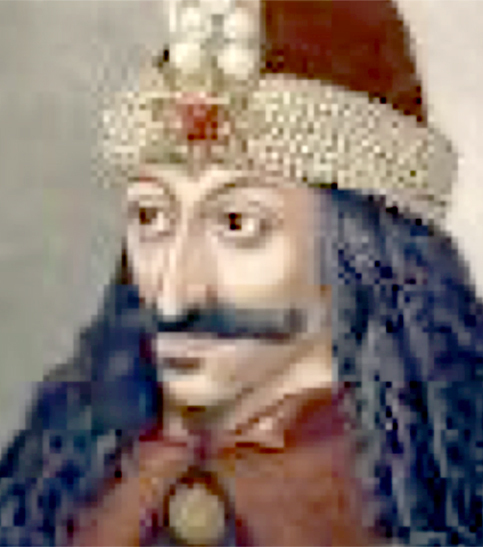
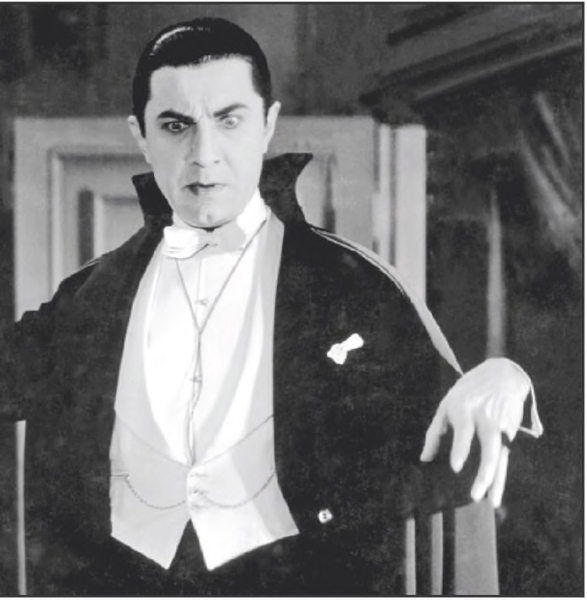
The time of year has arrived when spooky things come knocking, requesting candy to fuel their haunted activities. Halloween’s history focuses on established traditions but runs deeper than most realize. Each monster has a different history. One traditional villain has a history of a monster and honored saint. Dracula, history’s bloodiest monster, had a vital role saving Christianity for millions.
Orthodox Christians were under constant Muslim Turk invasions.
The Balkan Region, from Greece northward to Vienna, created a Muslim doorway into Central Europe. The population included a mix of superstition and religious faith. The fear of God and the fear of the unknown established haunting traditions from the battle of religious faiths.
One haunted region, now modern Romania, included the territories of Wallachia and Transylvania. Populated with Roman Catholics to the west and Orthodox Christians to the east, the kingdom ruled by the forefathers of the infamous Dracula. This region was in the path of the Turks.
Mircea the Great, Wallachia's ruler, had to unify the Christians to resist the Islamic threats. He joined the Order of the Dragon, whose knights vowed to protect Christians. His name changed to 'Drac' meaning 'the dragon' or 'the devil.' To add 'the' to the name of Drac, eastern languages added 'ul,' making Mircea's new name 'Dracul.' His uniform included a green cape with red lining to represent the dragon’s blood.
During Holy Week, a black cape was worn to show mourning for the passion of the Christ while the interior red represented the Christ's blood.
The Turks conquered Wallachia and allowed Dracul to remain in power. They took two of Dracul's sons for conversion to the Islamic faith, eventually to return to the homeland to enforce Islamic law on Christian people.
One son, Radu, converted while the other, Vlad, refused. The Turks tortured him. Upon the death of his father, Vlad was released to replace 'Dracul.' He had to stand as junior for the late senior. That identity added a letter 'a' to the name. Vlad now became 'Dracula.' Burning with a hatred for Turks and Islam, trained in the art of torture, Dracula changed the ancient lands into a region of fear for his foe. Vlad Dracula turned the land of Transylvania into a region that justified its name.
The word 'trans' reflected transportation across or beyond, while 'sliva' represented the forest. Transylvania translated into a land across or beyond the forest. For the Turks, it was a forbidden land. Vlad took his captured enemies and impailed them onto spikes maldng a forest of stakes skewered with Turkish soldiers. So horrible and fearful, Turkish armies hurried around the region unwilling to transport through the area of the forest... leaving the name of Transylvania as a land of haunted and gruesome memories. Dracula became known as Vlad the Impailer, an individual who history would not let die.
Dracula met his end in a battle against the Turks, but the fear continued after his death. In a land so superstitious, many believed the ‘undead’ formed into different shapes, escaped the grave to feast on the living vampires. Peasants often reopened a fresh grave to investigate and if evidence was found ‘the undead' was killed with a wooden stick into the chest. Gasses from decomposition escaped leading peasants to believe the sound was the soul leaving the body.
As for Dracula, beloved leaders’ graves were often robbed and skulls held for ransom. Many were buried in secret locations with an identified grave as a decoy for grave robbers.
When Dracula’s identified grave was opened to find animal bones, the superstitions set in, claiming Dracula was now a vampire. Eastern Europeans often identify Dracula as a hero for saving Christianity. Yet, the horror of his name helped to establish the vampire role throughout western pop culture.
Now when those little vampire monsters come for Halloween candy, make sure Dracula gets an extra 'bite' of thanks for saving Christianity for Eastern Europe.